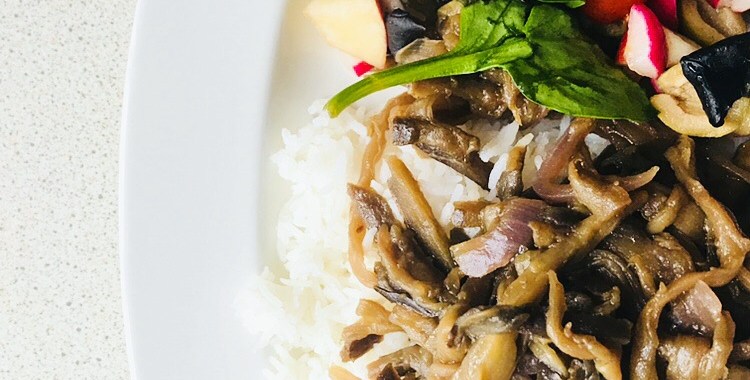
Julienned Aubergines (Eggplants)


This is an absolutely delicious and versatile dish. It also is extremely easy to make! Therefore, it can be your go-to for a healthy delicious meal any day and at any time.

We are aware that the term “julienne” is unfamiliar to a lot of home cooks. Some people think it is related to the name, Julian, and that confused them even more! Julienning is a method of cutting by which you slice fruits or vegetables into short thin strips. It takes a lot of practice to do this quickly. However, once you master it, it’s a skill you will love to show off!

To julienne aubergines, first, you will cut the top and bottom of an aubergine then slice it in half, lay the cut side on your chopping board and slice down the length of the aubergine to create thin strips. Next, you will lay the slices on their side with each slice overlapping the one next to it and you will make slices again to ake matchstick-like pieces. If the aubergine’s really tall, just cut the pieces in half while they’re stacked together.

Aubergines are very nutrient-dense. They contain good amounts of protein, fibre, vitamin A, pyridoxamine (vitamin B6), folate (vitamin B9), vitamin C, vitamin K, calcium, iron, magnesium, manganese, and potassium as well as other nutrients such as thiamin (vitamin B1), riboflavin (vitamin B2), niacin (vitamin B3), pantothenic acid (vitamin B5), vitamin E, choline, copper, phosphorus and zinc. Therefore, although so simple, this dish is really healthy. You can find more about the roles of the nutrients mentioned in our Nutrient Index.

Without further ado, here’s our Julienned Aubergine Recipe.

Bon Appétit!

Continue reading “Julienned Aubergines (Eggplants)”

Vegan Challah Bread


Challah bread is a beautiful, shiny, delicious and slightly sweet Jewish braided bread. Traditionally, this bread is made with enriched dough. This means that the dough contains eggs, and for Israeli challah, oil, which add to its taste, texture and appearance. Therefore, conventionally made challah bread is not vegan (to the dismay of those who have tried it before) although unlike European enriched doughs, it is parve (it does not contain dairy).

Today, we are going to share our tried and tested delicious challah bread recipe with you. It is beautiful, delectable, flavoursome and will be the perfect addition to your dining table at any time of the day. This is the one bread recipe that will have your friends and family thinking you are a pro-baker and asking for you to make bread especially for them.

We will not keep you away from this recipe much longer. So, here’s our vegan challah bread recipe.

Bon Appétit!

Continue reading “Vegan Challah Bread”

Ladies’ Finger Tomato Sauce


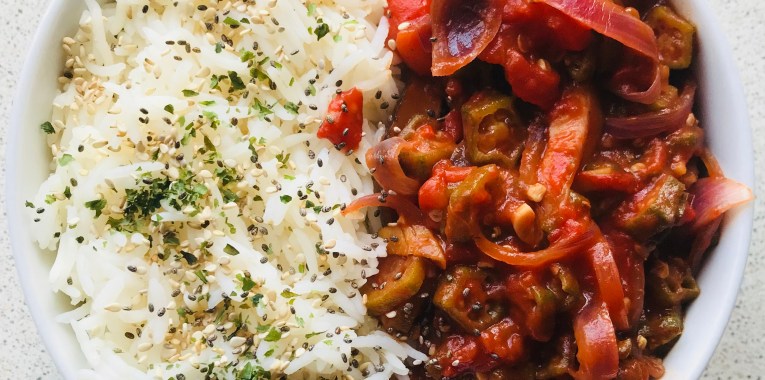
Ladies’ finger tomato sauce is a delicious, easy to make and nutritious sauce which you can serve alongside rice, over potatoes or even with pasta! This dish is not slimy like okra  (ladies’ finger) dishes can tend to be. This is due to the acidity of the tomatoes added to the dish, which naturally reduce the amount of slime the okra releases. The dish is also very minimally agitated using utensils in order to not promote the release of a lot of slime from the okra.

Okra is a pod which is high is a great source of nutrients such as vitamin C, vitamin K and manganese. It also contains some protein, vitamin A, thiamin (vitamin B-1), riboflavin (vitamin B-2), niacin (vitamin B-3), pantothenic acid (vitamin B-5), pyridoxine (vitamin B-6), folate (vitamin B-9), vitamin E, choline, calcium, copper, iron, magnesium, a little omega-6 fatty acid, phosphorus, potassium and zinc. The other ingredients in this recipe further enhance the nutritional value of the final dish making it nutritious while still offering a tasty experience. You can find more about the roles of the aforementioned nutrients in our Nutrient Index.

Without further ado, here’s our Ladies’ Finger Tomato Sauce recipe.

Bon Appétit!

Continue reading “Ladies’ Finger Tomato Sauce”

Black Bean Pasta


Black bean noodle meets stir-fried pasta – that’s what our black bean pasta is like. It doesn’t contain a chunjang (fermented black bean paste) like the traditional Korean-Chinese black bean noodles, jjajangmyeon. However, in place of chunjang, it is made using a blend of black beans, garlic, ginger and other flavour enhancing ingredients. This blend is used to stir fry vegetables (keeping the recipe low-fat) then the rest of it is tossed with pasta to make a delicious, umami, flavoursome meal.

The black beans in this recipe are great sources of nutrients such as protein, fibre, thiamin (vitamin B-1), riboflavin (vitamin B-2), niacin (vitamin B-3), pantothenic acid (vitamin B-5), pyridoxine (vitamin B-6), folate (vitamin B-9), calcium, copper, iron, magnesium, manganese, omega fatty acids, phosphorus, potassium, selenium and zinc. Although black beans are high in carbohydrates they have a lower glycemic index than a lot of other high carb foods. They also aid in minimising the risk and effects of diabetes by reducing the spike in blood sugar levels from consuming food. You can find more information about the benefits of the nutrients found in black beans in our Nutrient Index.

Without further ado, here’s our black bean pasta recipe!

Bon Appétit!

Continue reading “Black Bean Pasta”

Vegan Bigos – Polish Hunter’s Stew


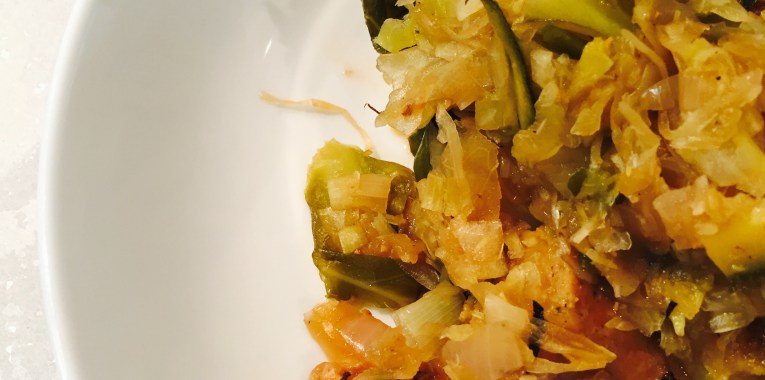
Bigos, also known as ‘Hunter’s Stew,’ is a traditional Polish dish consisting of sauerkraut, fresh cabbage and a smoked Polish sausage known as “kiełbasa” and, occasionally, some other forms of meat. You can find this beloved dish at various Polish events and always made slightly different (depending on who made it) but still enjoyed by the general public.

Our bigos recipe is greatly influenced by that of Samantha’s (our founder’s) aunt who lived in Poland from her mid-teens and into adulthood. It is also influenced by recipes she’s read and those told to her by Polish friends.

We can attest that, although the recipe is different, this vegan bigos smells and tastes like the traditional (non-vegan) bigos and is both nutritious and delicious!

We hope you enjoy our recipe and, if you are Polish, please share the differences between this recipe and yours in the comments section under this post or on our Instagram page.

Bon Appétit!

Continue reading “Vegan Bigos – Polish Hunter’s Stew”

Know Your Milk: Your Guide to Plant Milks


Over the years, people have become more aware of the negative environmental, health and animal welfare impacts of the dairy industry and dairy consumption. This has lead to more research into alternatives for dairy products such as beverages consumed for centuries that look or perform similarly to dairy for particular uses. These beverages include the coconut milk used in Asian curries, soy milk, which has been produced and used in China for the last 7 centuries and tiger nut milk and rice milk which have been used in the western and northern parts of Africa, and in Spain, to make kuunu aya, horchata de chufa and horchata de arroz before 1000AD. As a matter of fact, the white liquid formed from blending grains, tubers, seeds and some fruits with water has been referred to as “milk” for the last 8 centuries!

Whether you are allergic to dairy, lactose-intolerant, vegan or just looking to reduce your consumption of animal products/by-products, there is a plant milk for you. Some of these kinds of milk compare closely with the nutritional value of dairy, without the potential negative health effects, while others contain nutrients that can not be found in dairy making them healthier or more suitable for certain purposes.

In this article, we are going to introduce you to a few plant milks to give you a better idea of what they are and make it a bit easier for you to find the most suitable milk for you.

Continue reading “Know Your Milk: Your Guide to Plant Milks”

Wholewheat Waffles


Waffles are a delightful breakfast addition! They can be eaten on their own, doused with syrup, toasted with jam, butter or cream cheese spread on them, with fresh fruit, ice cream or breaded and fried seitan/tofu on them or even as a replacement for the bread in a sandwich. Yes! That’s actually a thing! We’ve never tried it, but it is a thing!

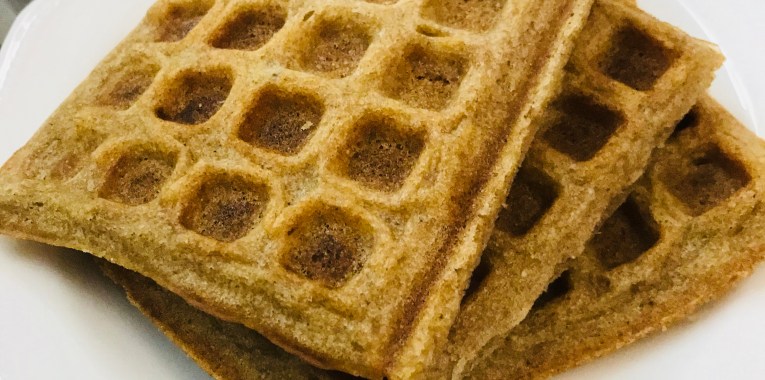
Our wholewheat waffles have the same texture, and taste just like, conventional waffles made with plain/white flour, eggs and dairy. Yet, they don’t contain animal by-products and they are made even healthier by the nutrients still intact in the wholewheat flour which would otherwise not be present if white flour was used.

These waffles contain thiamin (vitamin B-1), riboflavin (vitamin B-2), niacin (vitamin B-3), pyridoxamine (vitamin B-6), pantothenic acid (vitamin B-5), folate (vitamin B-9), betaine, calcium, choline, copper, iron, magnesium, manganese, omega fatty acids, phosphorus, potassium, protein, selenium and zinc. You can find more information on the functions of these nutrients in our Nutrient Index.

Without further ado, here’s our recipe to these amazing easy-to-make waffles!

Bon Appétit!

Continue reading “Wholewheat Waffles”

Pulled “Pork” Pasta


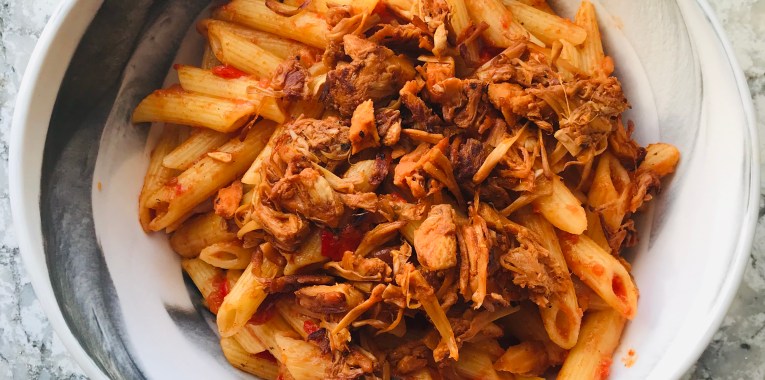
Pulled ‘pork’ pasta is both an aesthetically pleasing and delicious meal. By tweaking our recipe for the pulled “pork,” you can make vegan versions of shredded chicken and shredded duck.

The question on your mind right now is probably, “what could have been used to make the pulled pork?” Initially, you might have thought of tofu or seitan, but for this recipe, that’s not the case. Today, we are going to introduce you to a new pantry ingredient – jackfruit!

Whenever we’ve mentioned jackfruit to people, we receive comments like, “a fruit named jack?” or “how can you make something so savoury with a fruit which is sweet?” Well, although jackfruit is a bright yellow-orange, bubblegum tasting fruit, when it’s young/unripe it’s a rather beige colour and savoury, although it might be possible to get a hint of a sweet undertone to its flavour when eaten uncooked. Young jackfruit is excellent at holding the flavour of whatever it is seasoned/cooked with and is so fibrous that it can easily be pulled or shredded to mimic the texture and consistency of pulled and shredded meats.

Jackfruit contains good amounts of vitamin A, vitamin C, thiamine (vitamin B-1), riboflavin (vitamin B-2), niacin (vitamin B-3), pyridoxamine (vitamin B-6,) folate (vitamin B-9), fibre, calcium, copper, iron, magnesium, manganese phosphorus, potassium, selenium, sodium zinc, omega-3 and omega-6 fatty acids and even protein. You can find more information on the roles of these nutrients in the body in our Nutrient Index.

So, without further ado, here’s our pulled “pork” pasta recipe!

Bon Appétit!

Continue reading “Pulled “Pork” Pasta”

Buddha Bowl (“Balanced Meals In A Bowl”)


fBuddha bowls are a collection of various, usually vegan or vegetarian, meals foods served together in a wide pasta bowl or high-rimmed plate. They usually consist of grains, a protein source, a fat source, cooked vegetables and raw vegetables. Some times, they also include a bit of a sauce. Basically, they are balanced meals in a bowl.

Buddha bowls are not something we created. They have been growing in popularity, especially in the plant-based community, since 2013. According to the author of Buddha’s Diet, Zen priest, Dan Zigmond, the name is derived from the act of Buddha walking through the streets with his bowl and eating whatever the local people would place in his bowl as alms.

We would like to share a simple, yet very nutritious recipe for a Buddha bowl with you today. No measurements are given as it’s expected to be made to taste and with as much or as little of each ingredient as you would like.

Bon Appétit! Continue reading “Buddha Bowl (“Balanced Meals In A Bowl”)”

Seitan Recipe


Seitan is a vegan meat substitute that has been growing in popularity over the years. It is so versatile that nowadays, it is used to make vegan beef, fried chicken, ham slices, sausage, minced meat and so on. Apart from its versatility, seitan is also a great source of protein and various minerals, such as iron, selenium, calcium, phosphorus and copper.

What is seitan made from? Seitan is a product of the vital wheat gluten, which is the pure protein found in wheat flour. However, unlike wheat flour, seitan is low in carbohydrates and mostly does not contain starch. Seitan is made by hydrating this protein with a range of seasonings then cooking in a way specific to the final product desired. In our opinion, this meat substitute is more similar to both the appearance and texture of meat.

Without further ado, here’s one of our delicious seitan recipes!

Bon Appetit!
Sponsored by: At His Feet Devotionals, who funded the making of this recipe.
Continue reading “Seitan Recipe”